Oil Feild Equipment Hydrocyclone Desilter About
Hydrocyclones are simple mechanical devices, without moving parts, designed to speed up the settling process of solids. Drilling fluid containing solids is fed tangentially into the body of the hydrocyclone, where centrifugal force induced by the flow causes heavier solids to separate from lighter solids. The heaviest solids are discharged out the bottom (underflow) of the hydrocyclone and the lightest solids exit the top (overflow). The separation of solids is dependent upon feed particle size, fluid viscosity, fluid feed pressure (as a function of fluid density) and hydrocyclone size. Reliable Industrial Corporation offers two (2) models of hydrocyclones: desanders (12-inch cones) and desilters (4-inch cones). Fore each application, RELIABLE will determine the cone configuration and the pump and motor requirements necessary to maximize liquid/solids separation
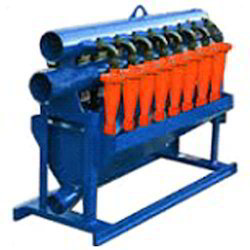
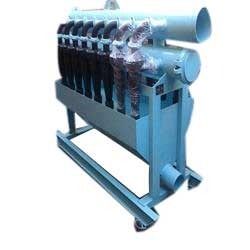
Cutting-Edge Solid Control for Oilfield DrillingThe Hydrocyclone Desilter is purpose-built for the stringent requirements of oilfield drilling operations. Equipped with multiple hydrocyclone cones, it ensures superior removal of fine solids from drilling mud, protecting downstream equipment and optimizing drilling efficiency. Its continuous operation and advanced design deliver reliable performance even under demanding field conditions.
Engineered for Durability and Easy OperationConstructed from corrosion-resistant steel, this desilter is finished with epoxy coatings to withstand harsh environments. Its compact, skid-mounted design enables straightforward installation and transport. With a noiseless operation and both manual and automatic flushing options, it minimizes operational hassle while maximizing uptime and longevity.
FAQ's of Oil Feild Equipment Hydrocyclone Desilter:
Q: How does the Hydrocyclone Desilter separate solids from drilling mud?
A: The Hydrocyclone Desilter operates on the principle of centrifugal force. As drilling mud enters the hydrocyclone cone at high pressure, the rapid spinning motion forces heavier solid particles toward the cone wall, which are then discharged through the underflow outlet. The cleaner liquid exits from the overflow outlet, ensuring efficient solid-liquid separation.
Q: What are the main benefits of using this desilter in oilfield drilling operations?
A: Using this desilter delivers over 98% solid removal efficiency, extending the life of downstream processing equipment, maintaining drilling fluid properties, and improving drilling performance. Its corrosion-resistant construction and low-maintenance requirements add to operational cost savings and reliability.
Q: When and where is the Hydrocyclone Desilter typically installed?
A: The desilter is installed after the shale shaker and desander in the drilling mud circulation system. It is skid-mounted for quick set-up on site and is suitable for oilfields worldwide, particularly where continuous secondary filtration and effective solid management are critical.
Q: What is the process for installing and commissioning a Hydrocyclone Desilter?
A: Installation is straightforward due to its compact, skid-mounted frame. Simply connect the inlet and outlet flanges or clamps to the mud system, ensure stable placement, and link to a suitable pump. Commissioning involves checking all seals, verifying flow rates, and flushing the cones before use.
Q: How is maintenance carried out and what is the typical operational upkeep?
A: Maintenance involves periodic inspection and flushing of the hydrocyclone cones, either manually or via automated systems, to prevent clogging. The robust design and epoxy coating minimize corrosion and wear, simplifying routine upkeep and extending service intervals.
Q: What inlet sizes and flow rate capacities are supported by this desilter?
A: Customized inlet connections are available, with 6-inch inlets as standard. Each cone processes 60-120 m3/h, and systems are assembled to handle higher capacities by increasing the number of cones, making the desilter adaptable to various operational needs.
Q: What are the features that make this desilter suitable for industrial use in harsh environments?
A: Its heavy-duty steel construction, anti-corrosive epoxy finish, low-noise operation, and cylindrical-cone design ensure durability. Compliance with API and ISO standards, coupled with continuous operation and high-efficiency separation, make it ideal for industrial, oilfield environments.





 Send Inquiry

